The Valleys of Cappadocia: A Martian Landscape in the Heart of Anatolia
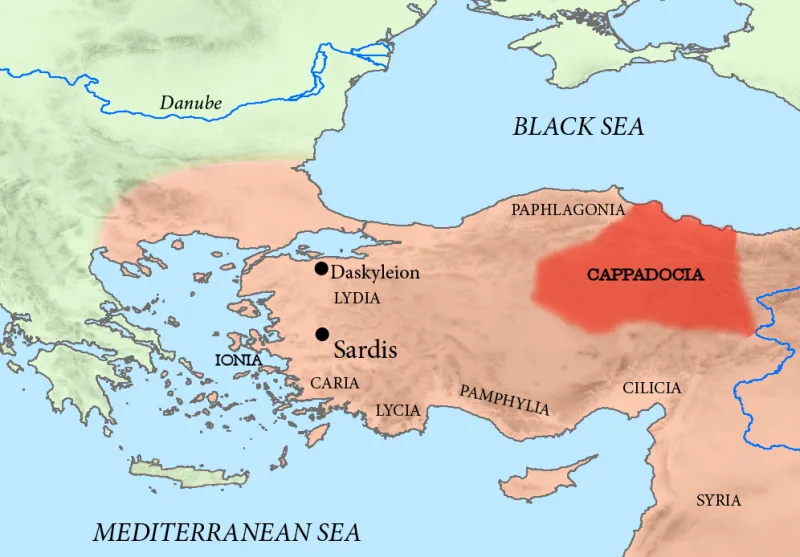
Cappadocia is one of those corners of the Earth where reality surpasses any fantasy. The valleys of Cappadocia, stretching between the towns of Göreme, Urgup, Uchisar, Çavuşin, and Avanos, form a fantastical landscape featuring “fairy chimneys,” pink rocks, dwellings and temples carved into tuff, and Byzantine frescoes. It is here that travelers from all over the world flock for sunrise hot-air balloon rides, hikes through Martian-like valleys, and overnight stays in cave hotels. The valleys of Cappadocia in Turkey are not just a single trail or route, but an entire network of gorges: the Red and Pink Valleys, Valley of Love, Valley of the Pigeons, Ihlara, Devrent, and many others, each with its own character. Together, they form part of the UNESCO site “Göreme National Park and the Rock Settlements of Cappadocia” (1985).
Geology and History: How Nature and Humans Created Cappadocia
The history of Cappadocia begins millions of years before the first humans. Between 9 and 3 million years ago, the volcanoes Erciyes, Hasan, and Güllüdag erupted periodically, covering the region with thick layers of ash and pyroclastic material. Over time, these deposits compacted into tuff—a soft, porous rock—covered on top by harder basalt. Rain, wind, and temperature fluctuations weathered the tuff over millions of years, leaving areas beneath the basalt “caps” untouched. This is how the famous “fairy chimneys” (peribacalar)—pointed rocks with characteristic mushroom-shaped tops—came to be.
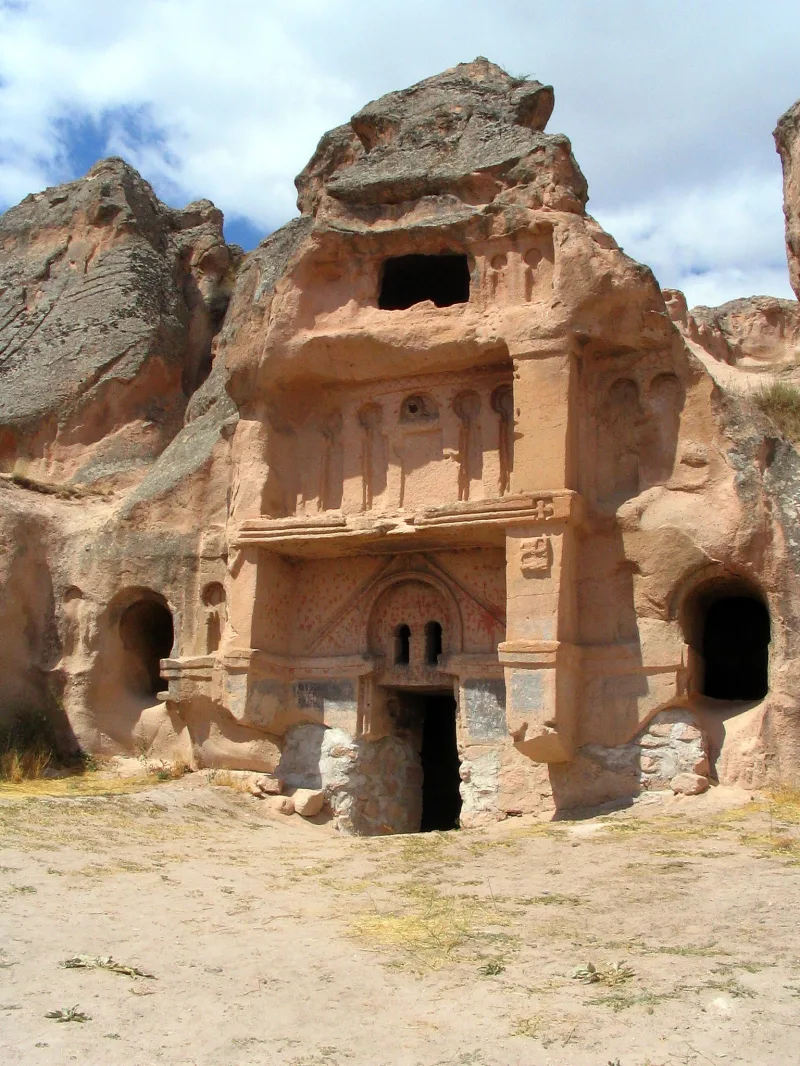
Humans arrived here very early. As early as the Hittite era, in the 17th–12th centuries BCE, the valleys were inhabited. During the Roman and Byzantine periods, Cappadocia became one of the main centers of early Christianity: the soft tuff was easily carved with simple tools, and monks began to carve cells, chapels, and entire monasteries into the rocks. It was here in the 4th century that the Cappadocian Fathers—Basil the Great, Gregory the Theologian, and Gregory of Nyssa—carried out their work, laying the foundations of Eastern Christian theology. During the era of Arab and later Seljuk invasions, the local population retreated to underground cities—giant labyrinths extending dozens of meters deep into the rock. From the 11th century onward, the region gradually came under Seljuk rule, and later under Ottoman rule; by the 20th century, many rock-cut settlements had been abandoned, and in 1985, the valleys of Cappadocia were designated a UNESCO World Heritage Site.
What to see and do in the valleys
The main thing to understand upon arrival: Cappadocia is not a single site, but a territory covering about 9,500 square kilometers, and the best way to experience it is to walk through at least a few of the valleys.
Valley of Love (Aşk Vadisi)
The most photogenic of them all, with tall phallic rock formations stretching in rows toward the horizon. The trail from Uçhisar or Göreme allows you to walk through it in 1.5–2 hours. The best time is an hour or two before sunset, when the tuff takes on copper-pink hues.
Red and Pink Valleys (Kızıl ve Güllüdere Vadisi)
These valleys are often combined into a single 6–9-kilometer loop trail, with access to ancient rock-cut churches—including the Church of the Crosses, the Column Church, and the Hajli Kilise with its preserved frescoes. The trails wind along picturesque cliffs, crossing streams and fruit orchards.
İhlara Valley (İhlara Vadisi)
On the outskirts of the region, near Mount Hasan, lies the İhlara Gorge—a 14-kilometer-long canyon of the Melendiz River featuring hundreds of Byzantine cave churches dating from the 8th to the 13th centuries. The trail along the canyon floor winds through dense stands of poplars and willows, creating the effect of an oasis in the midst of a desert landscape.
Pigeon Valley (Güvercinlik Vadisi)
Between Uchisar and Göreme lies the Pigeon Valley, named for the thousands of pigeon houses carved into the rocks: for centuries, locals collected the droppings to fertilize their vineyards. The views from the vantage point between Uchisar and Pigeon Valley are one of the symbols of all of Cappadocia.
Devrent Valley (Imagination Valley)
Near Avanos lies an unusual valley where whimsical rock formations resemble animals: a camel, seals, a kiss, the Virgin Mary. There are no trails or churches here, but a simple walk along the edge of the overlook turns into a game of identifying shapes.
Hot Air Balloon Ride
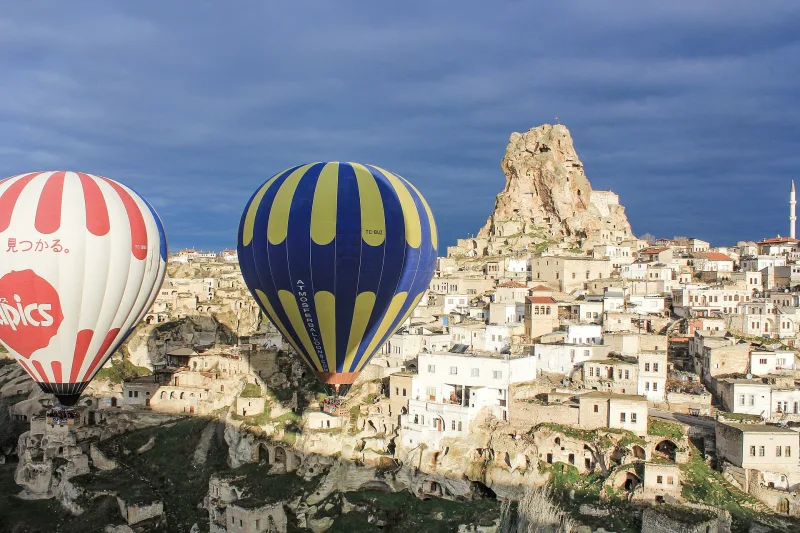
Cappadocia is one of the best places in the world for hot air balloon flights. At dawn, between 80 and 150 balloons take to the sky simultaneously, transforming the valleys into a postcard scene. The flight lasts about an hour and ends with a traditional glass of champagne at the landing site. This is one of those experiences worth planning an entire trip for.
Interesting Facts and Legends
- The name “Cappadocia” derives from the ancient Persian Katpatuka, meaning “land of beautiful horses.” Horses were indeed the region’s most important symbol as far back as antiquity.
- The Derinkuyu underground city extends at least 85 meters below ground and, according to estimates, could shelter up to 20,000 people along with livestock and food supplies.
- Some of Cappadocia’s rock dwellings are still in use today: in the vicinity of Göreme and Ortahisar, dozens of hotels operate in ancient monastic cells and Byzantine churches.
- The tuff is so soft that in the Middle Ages, some families carved out new rooms in the rock in just a few days—as their families grew.
- Hot air balloons rise over Cappadocia year-round: they fly 250–300 days a year, depending on the weather. Flights are canceled in strong winds.
How to get to Cappadocia
Most travelers fly into one of the region’s two airports: Nevşehir (NAV) or Kayseri (ASR). Direct flights from Istanbul take about 1 hour and 15 minutes. From Nevşehir to the town of Göreme, a convenient base for exploring the valleys, it’s about 45 minutes by car or shuttle; from Kayseri, it’s about an hour. There are also overnight buses from Istanbul, but the journey takes 10–12 hours. The most convenient option is to rent a car directly at the airport—the valleys are scattered over dozens of kilometers, and there is little public transportation between them.
Key reference points: Göreme (near the Open-Air Museum and the main trails), Uçhisar (the highest point in the region with a rock fortress), and Ürgüp (larger, with boutique hotels and wineries). All the valleys are connected by a network of trails and dirt roads; most routes range from 3 to 10 kilometers.
Tips for travelers
The best months to visit are April–May and late September–October. In spring, the valleys are in bloom; in autumn, the vineyards turn golden, and the temperature is ideal for hiking. In summer, during July and August, the air warms up to 32–35 degrees, and the rocks radiate heat, so it’s best to hike the trails early in the morning. Winter has its own magic: snow-covered “chimneys” and frozen valleys offer unique photo opportunities, but some flights are canceled due to wind.
Plan for at least three full days: one day for the Göreme Open-Air Museum and the nearby valleys, one day for the Red-Pink loop route plus the Valley of Love, and one day for the underground city and Ihlara. If you’re planning a hot-air balloon ride, book the early morning of the first day in case of cancellation—that way, you’ll still have the option to reschedule for the next day. Comfortable shoes are a must: the ground is loose tuff, and trail markings are sometimes unclear.
Practical tips: bring water, sunscreen, a hat, a flashlight (useful in dark cave churches), and definitely a warm jacket for sunrise—it’s cold at hot-air balloon altitude even in summer. Photographers will find ideal conditions: soft pink light at sunset and the blue hour at dawn. The valleys of Cappadocia in Turkey are one of those rare places where you want to climb higher, dive deeper, stop, and keep going; they truly deserve their place among the natural wonders of the world.
Underground cities and a parallel world beneath your feet
The main companion to the above-ground tuff landscape is the famous underground cities. There are over two hundred of them in the region, but only a few are visited by large numbers of tourists: Derinkuyu, Kaymaklı, Yozkoynak, and the recently excavated Nevşehir-Kalesi. These man-made labyrinths extend 8–12 levels into the rock and could accommodate tens of thousands of people in total. The passageways were deliberately made narrow and low to hinder the enemy’s advance, and the entrances to individual sections were sealed with round stone doors weighing hundreds of kilograms. Inside were living quarters, stables, wineries, churches, schools, wells, and ventilation shafts that ensured fresh air even on the lower levels. A walk through Derinkuyu or Kaymakli takes 60–90 minutes and is a must-see on any serious trip to Cappadocia. For people with claustrophobia, this experience may be challenging—the passages are indeed very narrow in places.
Unique cave hotels
A special part of the Cappadocian experience is spending the night in a cave hotel. This isn’t just a marketing gimmick: many rooms were actually carved into the tuff rock centuries ago and have been carefully restored, preserving the vaulted ceilings, stone niches, and antique fireplaces. The best cave hotels are concentrated in three villages—Göreme, Uçhisar, and Ürgüp. The stone retains heat perfectly: these rooms are warm in winter and cool in summer, with no need for air conditioning. The terraces of many hotels offer a direct view of the hot air balloons at sunrise—for many travelers, these few morning minutes on the roof become one of the trip’s most memorable experiences. Prices range from budget hostels to luxury suites, but even the simplest option gives you the feeling of “spending the night in another era.”
Cappadocia’s Cuisine and Wine
Cappadocia is one of the oldest wine-producing regions in the world. Winemaking was practiced here as far back as the Hittites, and the Cappadocian Greeks maintained the tradition for centuries until they were expelled in 1923. Today, dozens of wineries operate in the vineyards around Ürgüp, reviving indigenous varieties: Emir, Öküzgözü, Kalecik Karası, and Narince. It’s worth setting aside time for a visit to a winery—Turasan, Kocabağ, or Mahzen—for a tasting of local wines and a tour of the cellars, which are often carved into tuff. Traditional dishes pair perfectly with the wine: testi kebabı—meat baked in a sealed clay amphora, which the waiter smashes open with a hammer right at your table; manti—tiny dumplings with garlic yogurt; and dolma—stuffed grape leaves. For breakfast, hotels serve tables full of local brynza cheese, honey, pekmez (grape molasses), and fresh bread.
Horses and Horseback Riding
As you may recall, Cappadocia is the “land of beautiful horses,” and horseback riding here is one of the best ways to experience the valleys in the most poetic way. Several stables in Göreme and Avanos offer one-hour, half-day, and full-day routes through the Valley of Love, the Red and Pink Valleys, and the surroundings of Mount Erciyes. The horse walks where the path is too narrow even for two people, revealing views inaccessible by car or on foot. For children over 8 years old, this is one of the most memorable experiences; beginners receive instruction and are accompanied by experienced guides.
Winter Cappadocia
The winter season deserves a special mention. From December through February, the valleys are regularly blanketed in snow, and the landscape transforms into a completely different spectacle: white “chimneys” against a backdrop of gray-pink rocks, contrasting shadows, and empty trails. This is the perfect time for photographers and those tired of crowds, but you need to be prepared for the cold: nighttime temperatures drop to -5 to -10 degrees, and daytime temperatures rarely rise above +5. Hot air balloon flights continue in favorable weather, but are more often canceled. On the other hand, hotel prices are significantly lower, and the Göreme and Derinkuyu museums seem mystical in the truest sense of the word during the winter. If you’re traveling to Cappadocia in the winter, bring warm, waterproof shoes, a down jacket, and a hat—the wind on the plateau is fierce.